
The science
Measure continuously. Validate carefully.
nesteye combines computer vision, environmental sensing, and edge inference to turn barn activity into practical operating signals.

Fast enough to matter. Specific enough to test.
The goal is not to show operators more data. It is to identify a meaningful change, preserve its context, and make the result measurable.
Piling intelligence
Understand the pattern, not one crowded frame.
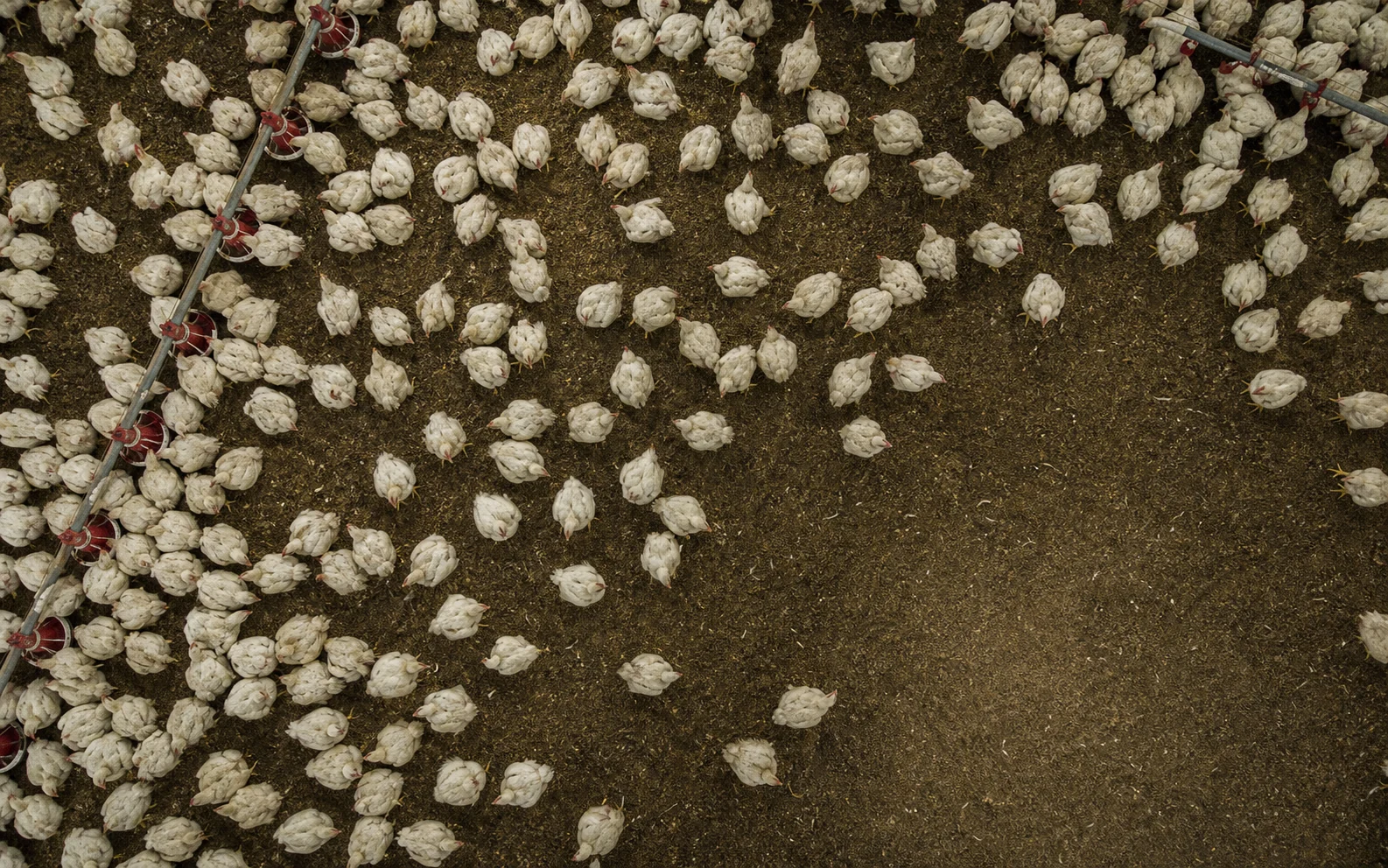
nesteye evaluates flock movement across time. Repeated-frame confirmation helps separate a developing pile from normal clustering, changing light, dust, and the visual complexity of a working barn.

Methods
Three signals. One timeline.
Each method answers a different operational question while preserving the context needed to interpret the result.
Behavior
Repeated-frame confirmation
A developing cluster must persist across multiple frames before the system treats it as a confirmed event, reducing reactions to ordinary movement.
Growth
Overhead morphometrics
Vision-derived body measurements support daily weight and uniformity estimates across more of the flock than a small manual sample.
Context
Synchronized barn signals
Environmental readings sit on the same timeline as flock behavior so operators can investigate the conditions surrounding a change.
Validation
Results need boundaries.
0.998
Piling-detection average precision on held-out test data
This is a test result, not a guarantee of performance in every barn. Layout, installation, lighting, dust, flock behavior, and operating conditions can affect results. Pilot planning establishes the correct baseline for each operation.
Roadmap boundary
Disease, mortality, and gait diagnostics remain future capabilities and are not represented as generally available today.
Evaluate it in context
